
LISTENING TO YOUR HOME
LISTENING TO YOUR HOME
Why the way a room sounds shapes how it feels, and how to design for the ear as carefully as the eye
If you've ever walked into a beautiful home with soaring ceilings, limestone floors, and freshly plastered walls, you may have noticed something strange within the first few minutes. Your own footsteps sound louder than they should. A casual comment to a friend seems to travel across the room and come back to you a moment later. Nothing looks wrong, and you probably couldn't point to a single flaw, and yet the space feels a little less restful than it appears in photographs.
Most design conversations focus almost entirely on what a home looks like. You talk about color, texture, layout, and light, and you spend months choosing the right stone for a countertop or the right linen for a sofa. Sound rarely enters the conversation at all, even though it shapes the emotional experience of a room just as much as anything you can see.
A House That Looks Calm but Doesn't Sound Calm
You can walk into a home that photographs beautifully and still feel a low hum of tension the moment you sit down. Very often, that tension traces back to sound rather than sight. When a home is filled with hard surfaces, glass walls, tile, stone, and polished wood, every room reflects noise instead of absorbing it. The dishwasher running in the kitchen carries clearly into the living room. A phone call in one bedroom drifts through the wall into the next. The espresso machine in the morning announces itself to the entire house.
None of this shows up in a photograph, but all of it shapes how your family experiences your home from one day to the next. A house that sounds harsh asks something of the people living in it, even when they can't name exactly what that is. Conversations get softer than they need to be, doors start closing out of habit rather than necessity, and your nervous system stays slightly on alert in ways that are hard to trace back to any single cause.
What Softens a Room
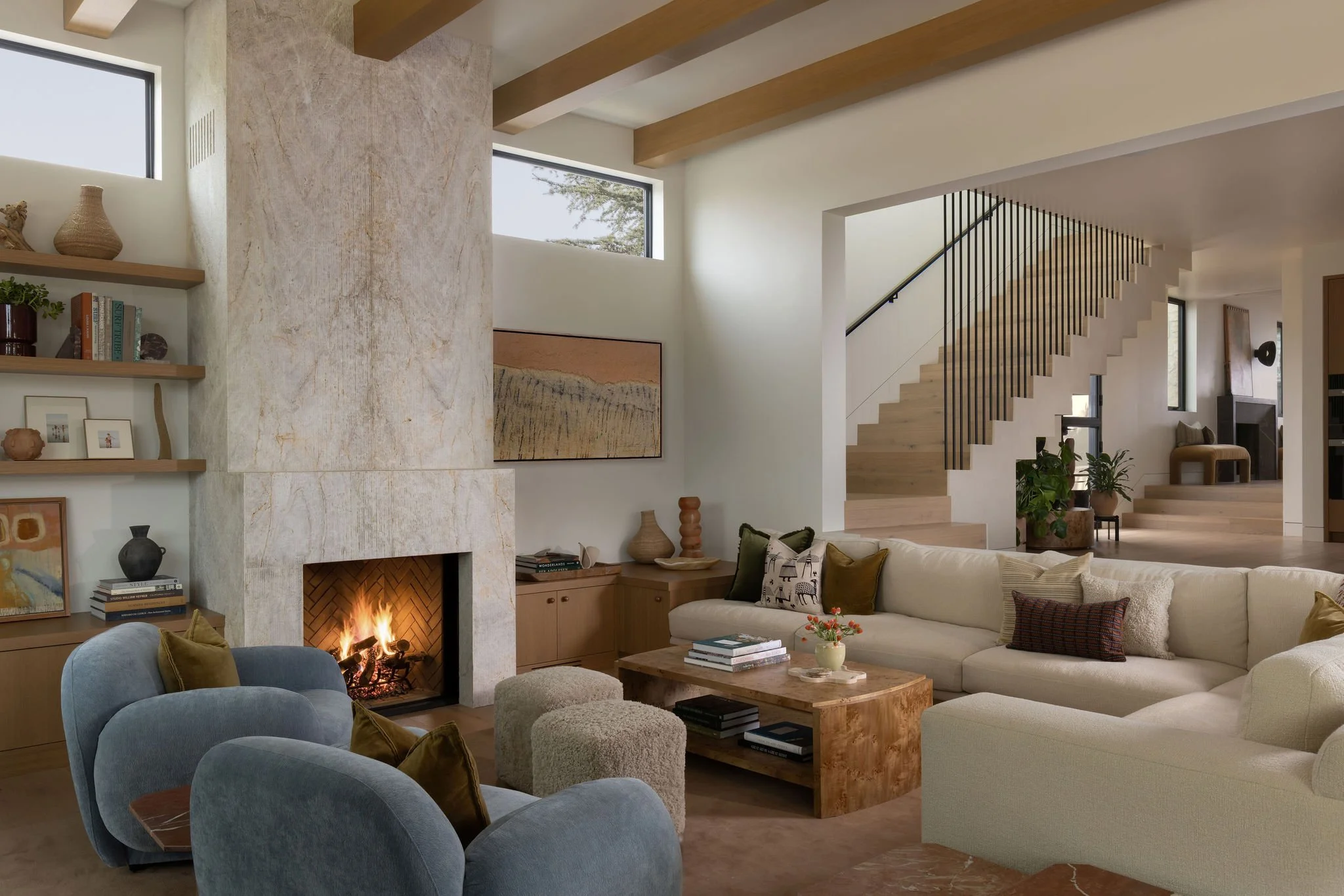
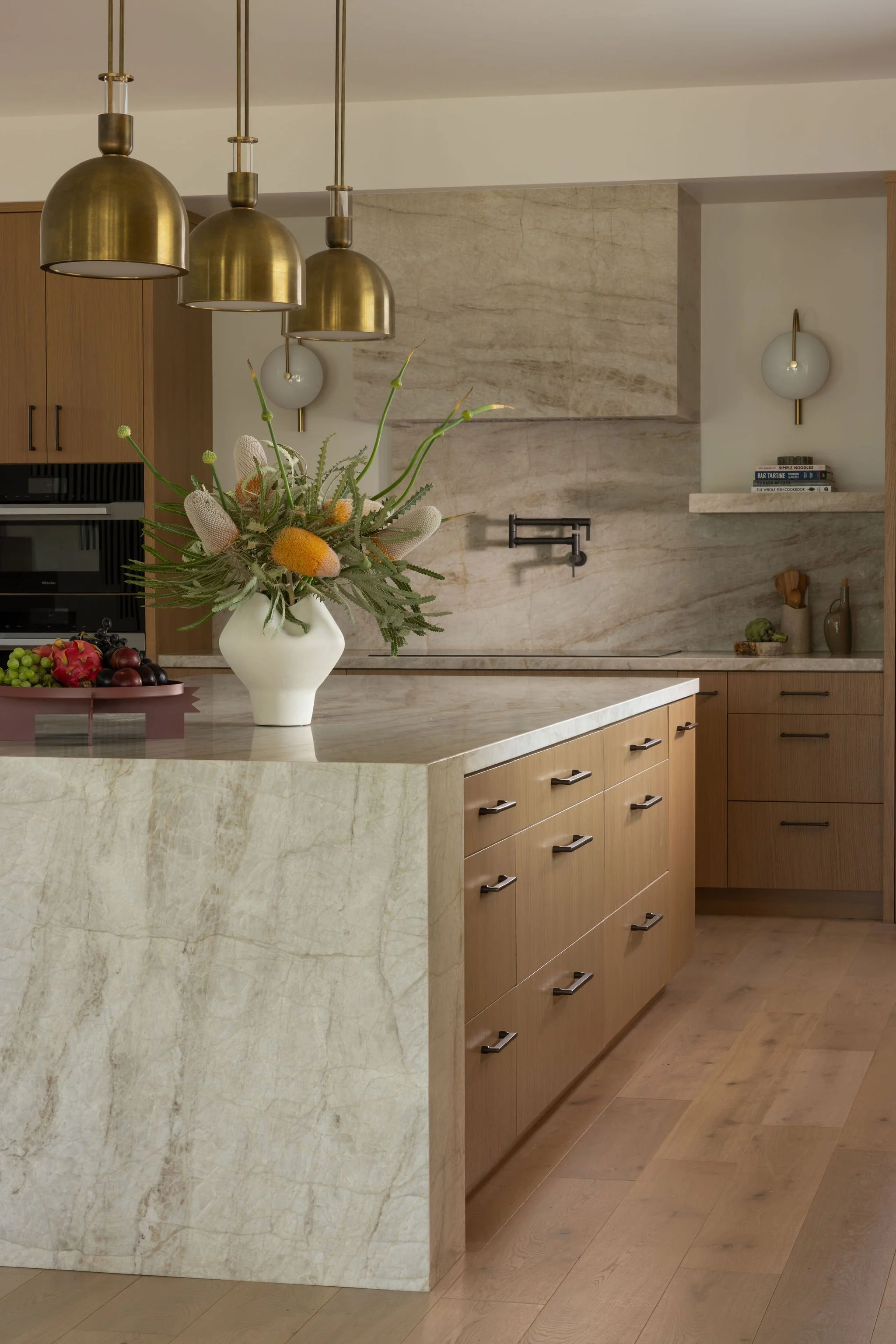
The good news is that the materials that make a home feel physically warm also tend to make it sound warmer. A thick wool rug absorbs footsteps instead of amplifying them, and a generous layer of linen drapery changes the way sound bounces off a wall of windows. Upholstered furniture, layered textiles, a woven headboard, and even a well filled bookshelf all work in the background to keep a room from feeling like an echo chamber.
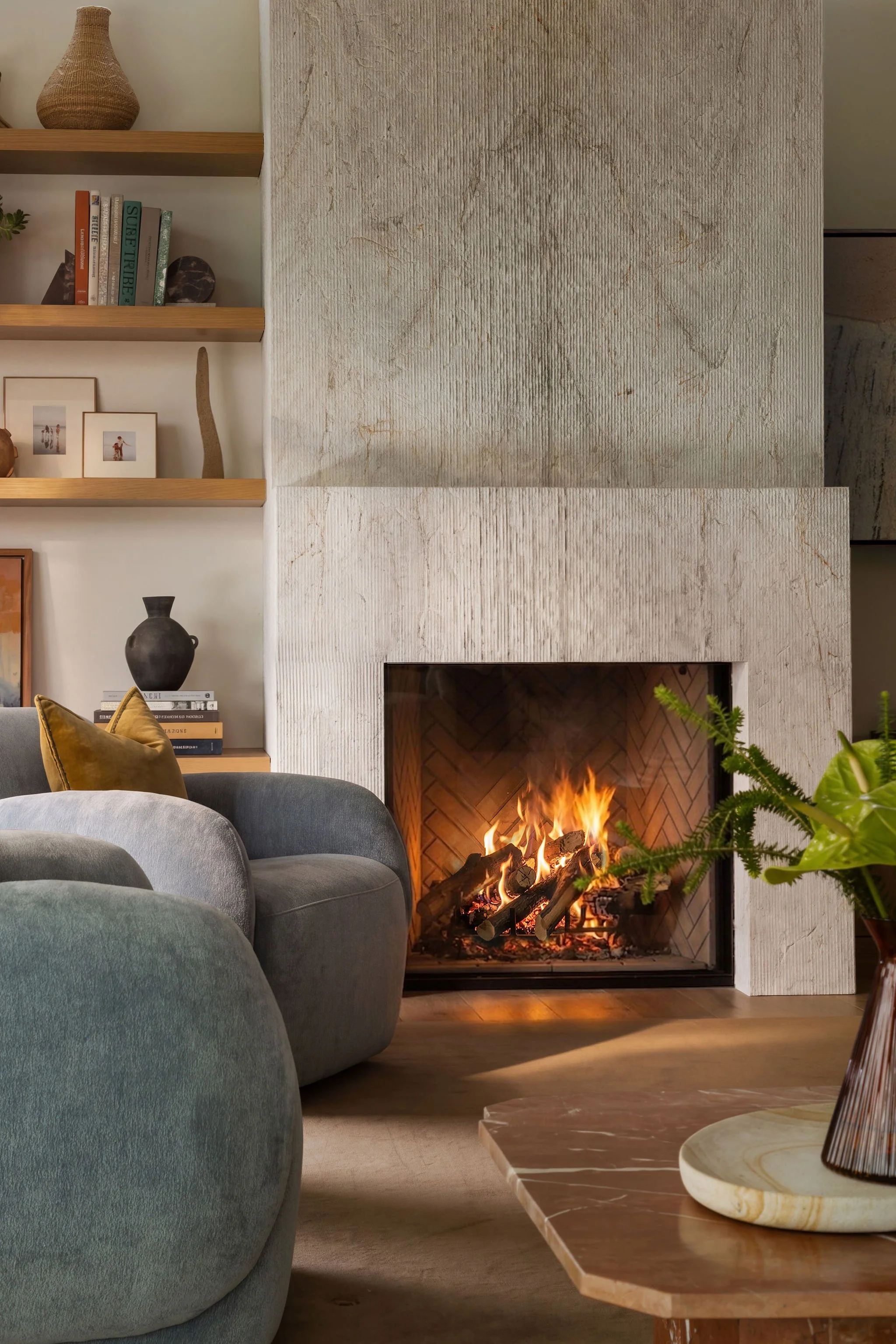
Some of the most effective acoustic choices are ones you would make for beauty alone. Lime plaster walls have a softer, more textured surface than smooth drywall, and they gently diffuse sound as well as light. A tapestry or large textile artwork brought home from your travels can do more for the feel of a room than any amount of rearranging. Even a pair of deep, upholstered chairs in a stone floored entry can turn a space that once echoed into one that feels welcoming the moment you step inside.
The Open Floor Plan Problem
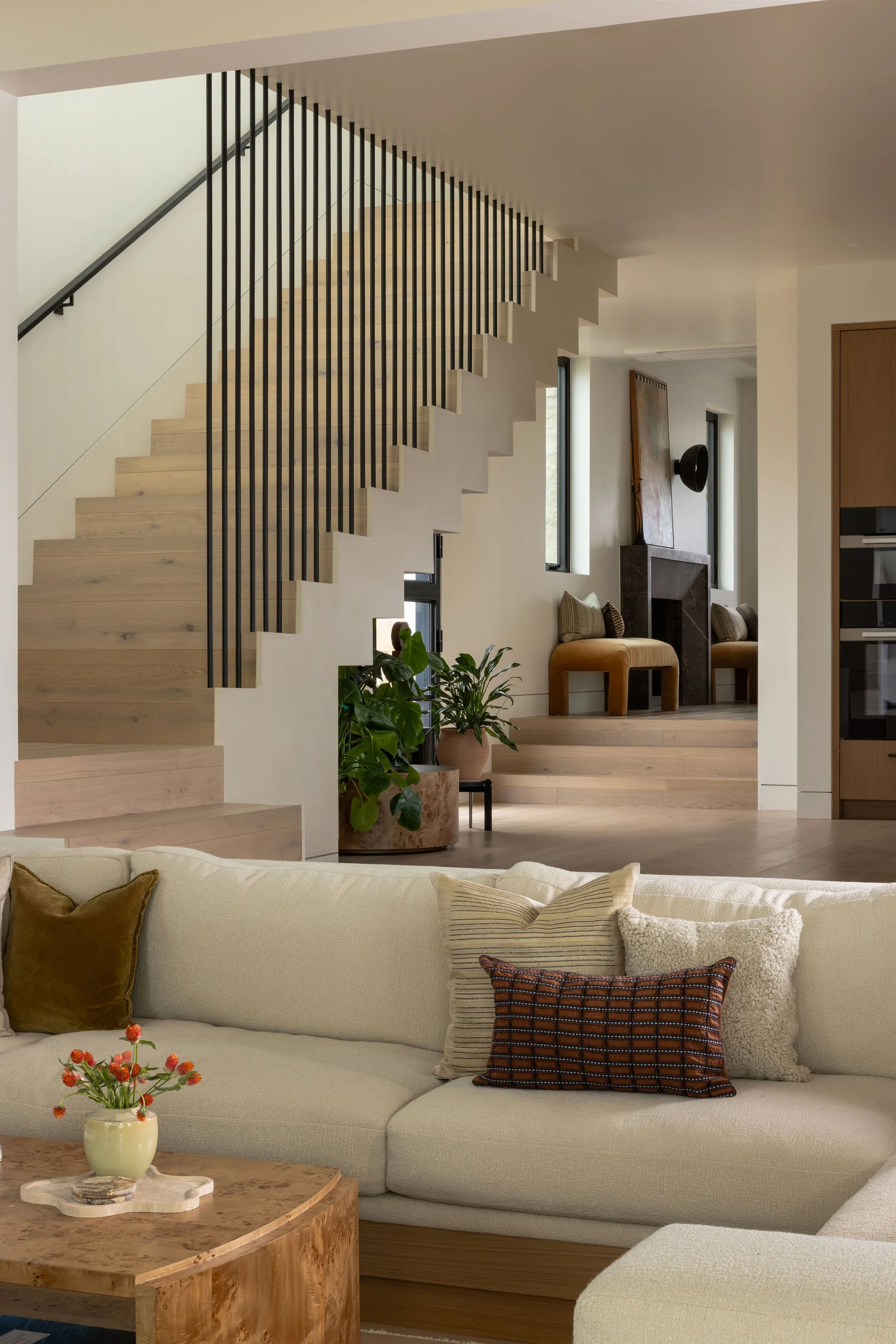
This is part of why open concept homes, for all their beauty and ease, can sometimes feel more chaotic than you expected. When your kitchen, dining area, and living room share one continuous space, every sound from every activity travels freely between them. The television competes with the conversation at the dining table, which competes with the sound of dishes being washed at the sink.
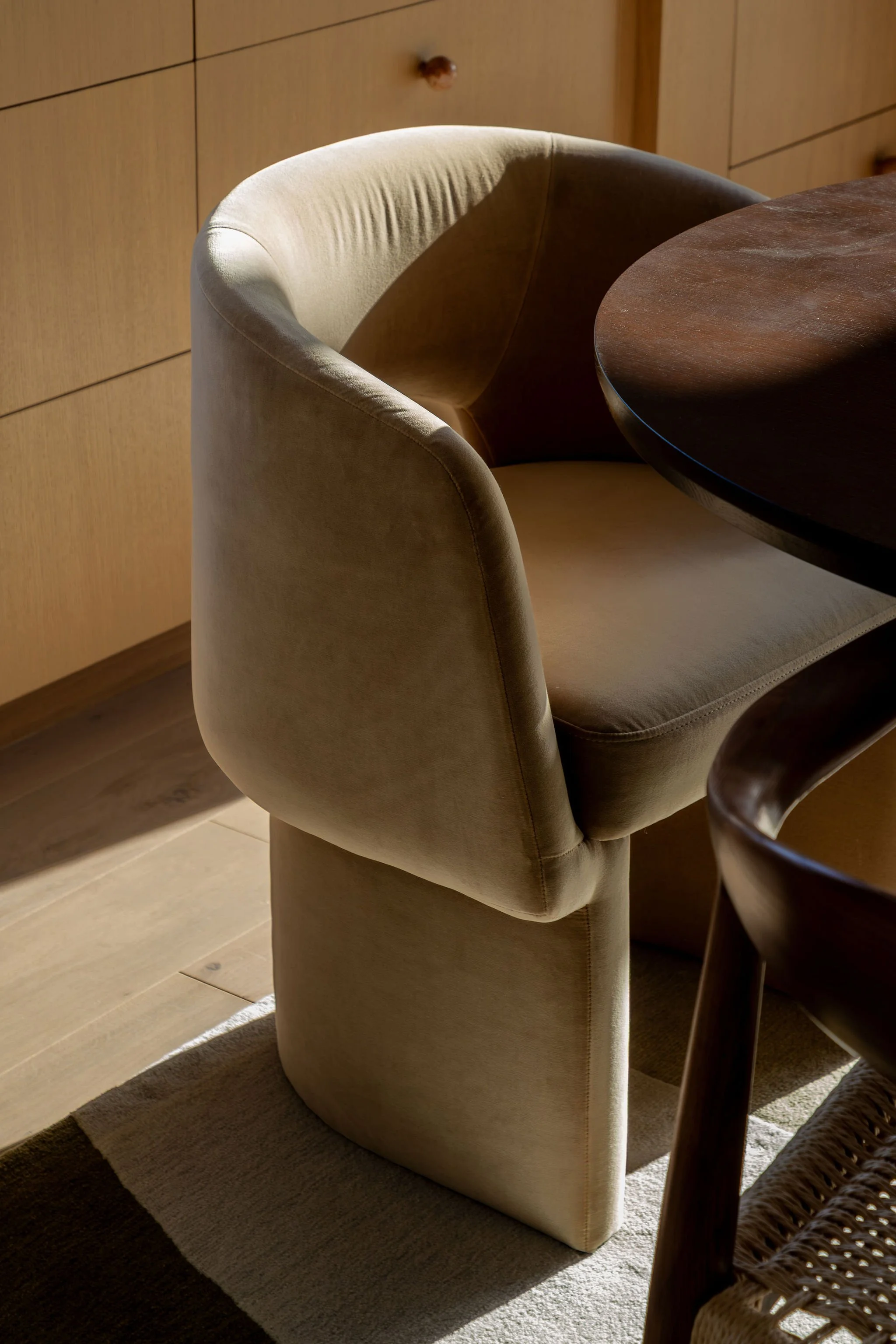
Designing an open layout well means introducing texture and softness deliberately, precisely because there are no longer any walls to do that work for you. An area rug can define the living space and absorb sound at the same time. Upholstered dining chairs, a slatted wood ceiling detail, or a row of built in cabinetry with textured fronts can break up long, hard surfaces so that sound settles rather than bouncing endlessly from one end of the room to the other. The goal is to keep all the openness and light you love while giving each zone a little more acoustic privacy.
The Sounds That Belong in a Home
Not every sound needs to be softened or removed. Some sounds are exactly what make a house feel alive, and they deserve to be heard clearly. Water running into a kitchen sink as dinner begins. A heavy front door that closes with a particular, familiar weight. The ocean breeze moving through an open window on a summer evening in Encinitas. These sounds become part of your family's sense of home in ways that are easy to overlook until they're gone, the way the creak of a certain stair in your childhood house still marks it as unmistakably yours.
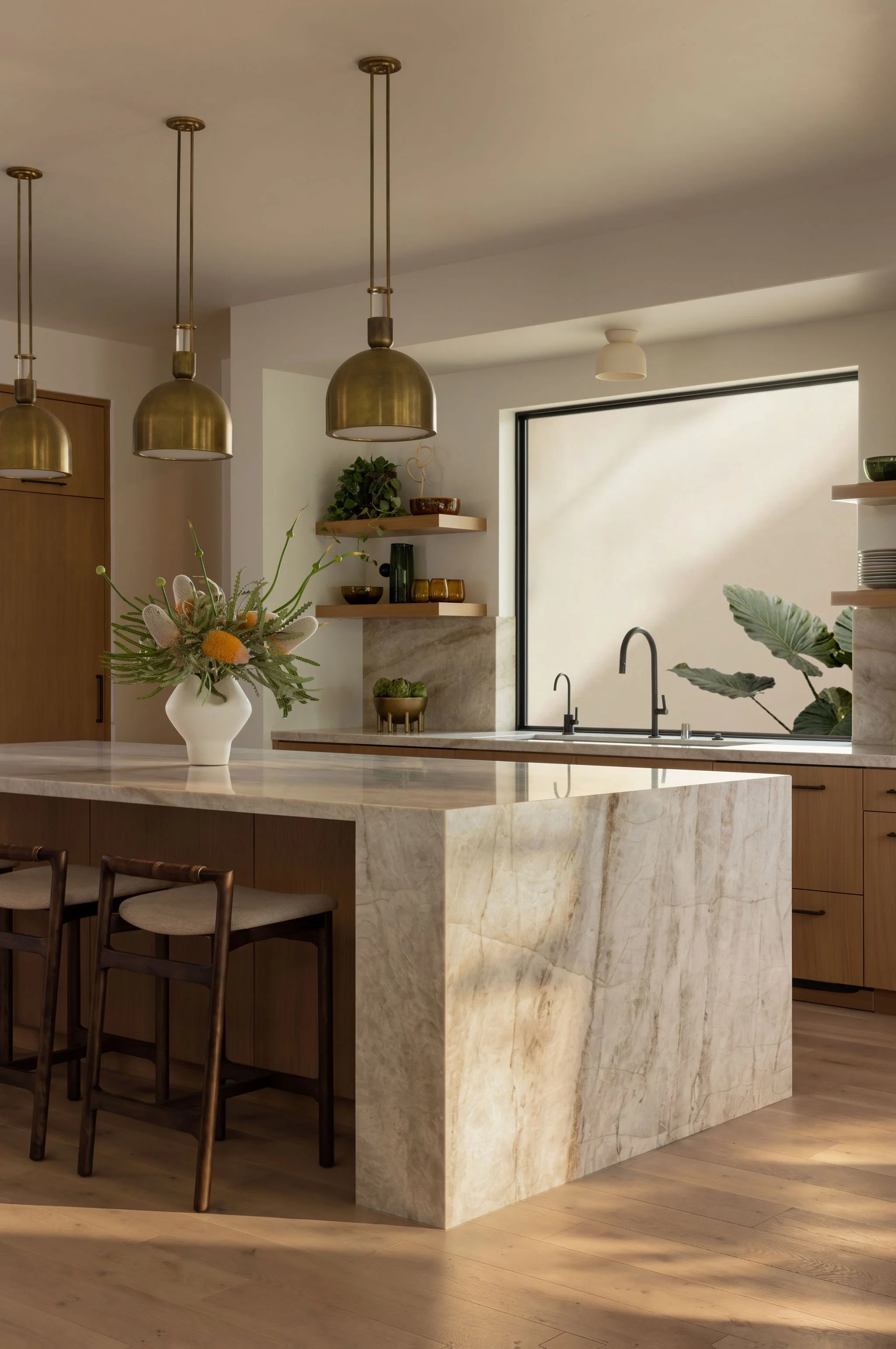
Some of the most memorable homes we've experienced, from courtyard villas in Bali to hillside houses along the California coast, use sound intentionally. A small fountain placed near a reading chair, or a garden planted with grasses that rustle in the wind, can bring a sense of calm into a room that no finish or fabric can achieve on its own. The aim was never a silent home. It's a home where the sounds that matter come through clearly, and the sounds that don't, the mechanical hum, the echo, and the noise bleeding between rooms, are softened enough that they stop competing for your attention.
Paying Attention on Purpose
You don't need a full renovation to start noticing how sound is shaping your home. Try sitting in a room for a few minutes without music or a television playing, and simply listen to what you hear. Notice which rooms carry noise from elsewhere in the house and which ones feel contained and restful. Notice whether hard surfaces are doing all the acoustic work in a space that could use a rug, a curtain, or simply one more soft piece of furniture.
Once you begin paying attention, you'll likely find that the rooms you already love most are also the ones that sound the best. They're usually the rooms with the softest textures, the most layered materials, and the fewest hard, empty surfaces.
The Design You Never Notice
A home that sounds right is easy to overlook, because it isn't doing anything to draw attention to itself. That, in a way, is the whole point. The best acoustic design is the kind you never consciously notice, because it's simply doing its job, letting the sounds you love come through and gently letting go of the rest.
When you design your home for the ear as carefully as the eye, the difference shows up in the moments that matter most. Conversations last a little longer, mornings feel a little slower, and the house itself begins to feel like the calm, restorative place you always hoped it would be.
If your home looks beautiful but doesn't feel as restful as you'd like, we'd love to help you discover what it could sound like.